The AI Production Planning Agent turns selected orders and backlog into optimized schedule scenarios, asks for the manager decisions that matter, lets planners edit or revise assignments, and commits the accepted plan through acqSYS scheduler validation. It is a core part of the platform on every Professional and Enterprise line.
Use the demo to plan selected demand, compare scenarios, adjust assignments, and commit jobs without losing scheduling safeguards.
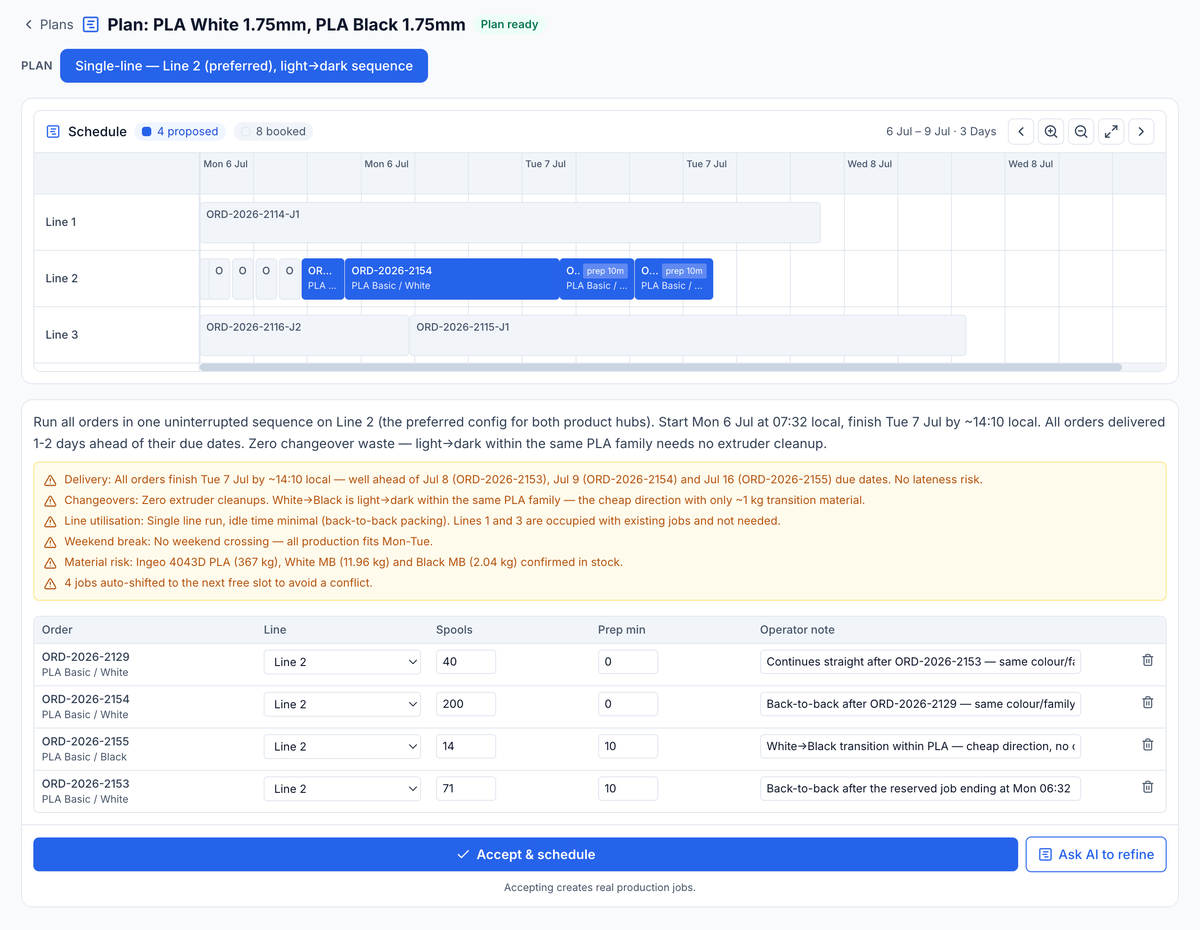
Built for production planning decisions before work reaches operators.
Start from chosen orders, backlog groups, directives, and planning constraints.
Create jobs only after manager review and scheduler validation.
Filament planning gets messy when urgent orders, ProductHub families, line configuration, shifts, reservations, prep time, and changeover logic meet the real calendar. The agent turns that messy decision space into reviewable scenarios instead of another spreadsheet negotiation.
The planning session keeps the demand, directives, scenario discussion, editable plan, and preferences that shape the next planning round — so your team moves from selected demand to a reviewed, scheduler-checked production plan without starting cold.
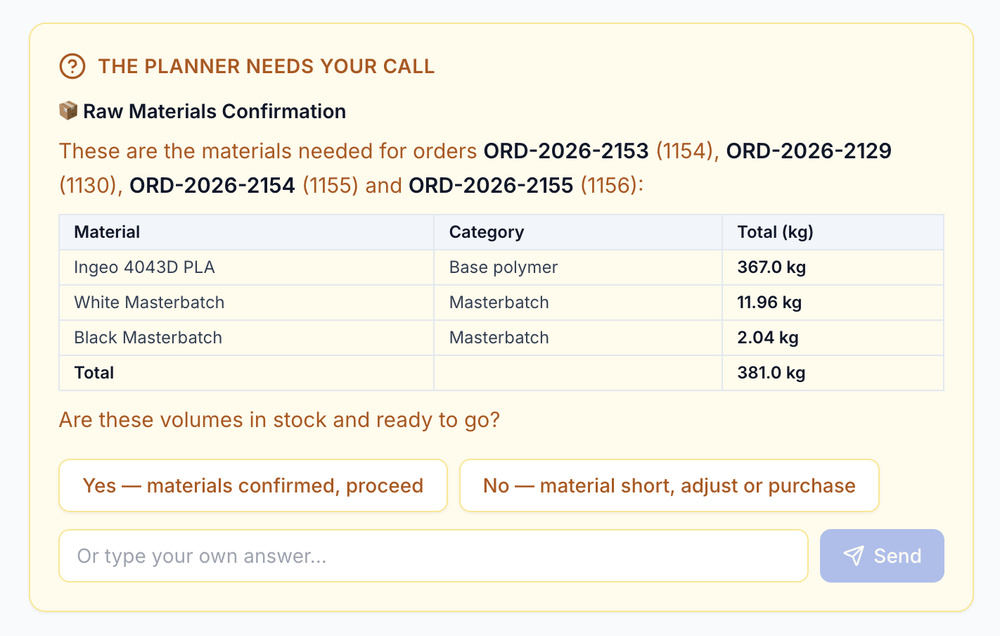
The agent is launched from selected orders or backlog context. Managers can add directives such as protect an urgent delivery, batch a product family, reduce changeover, or keep a line clear for maintenance.
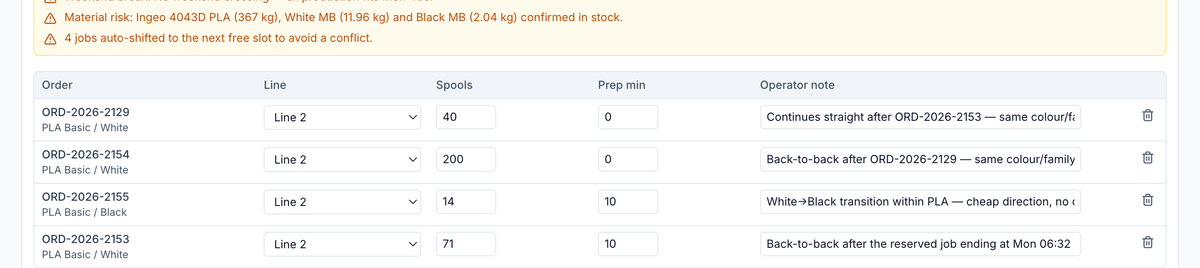
The agent asks managers for the decisions that matter, generates plan scenarios, and returns them with the reasoning behind each tradeoff. Planners can hand-edit assignments such as line, configuration, spool count, prep time, notes, and intended start.
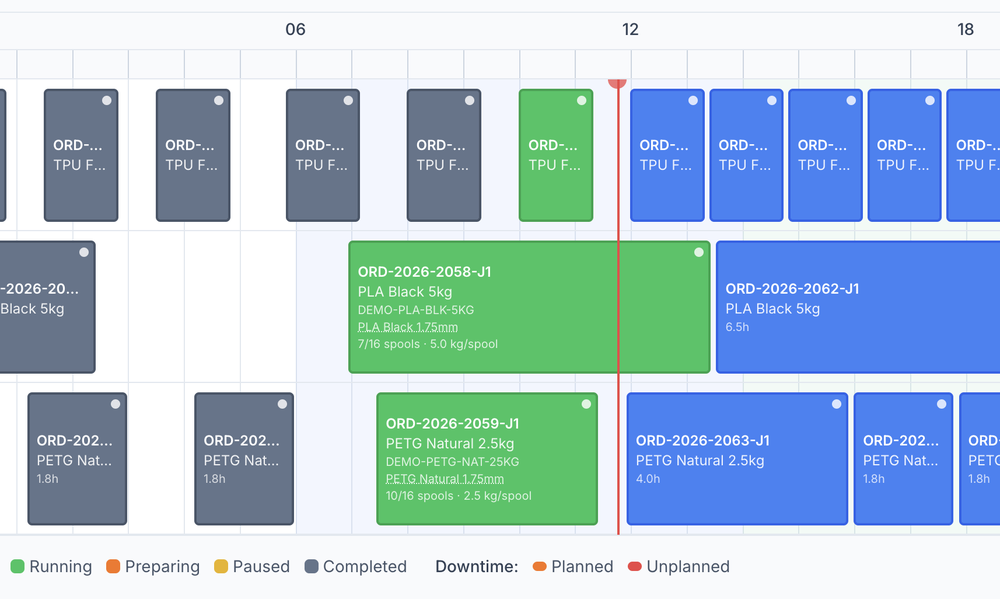
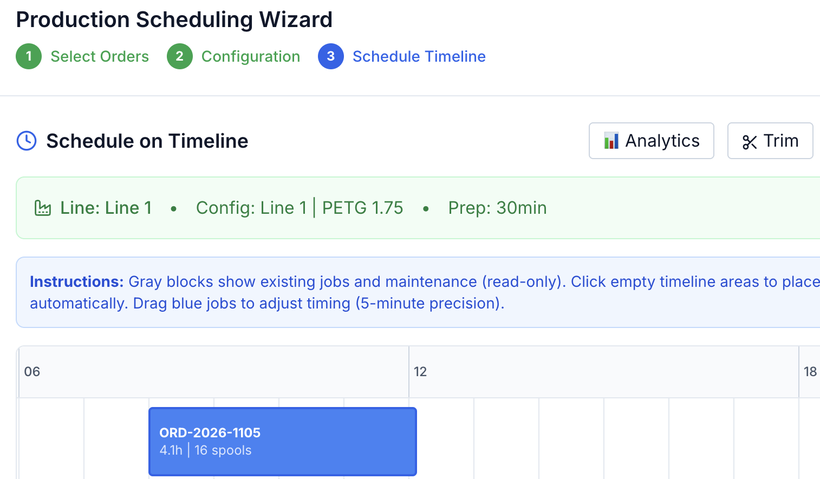
The point is not "AI makes a schedule." It is that AI-supported planning stays inside the same production-management rules that protect your capacity, shifts, reservations, conflicts, jobs, operators, QC, reports, and fulfillment.
acqSYS has two distinct AI tools. One plans work before it exists; the other reviews process evidence after spools are measured. They stay separate so each answer stays accountable.
Use the core planning and capacity model the agent commits through.
Explore →See schedule pressure and live production status after plans are released.
Explore →Carry accepted planning instructions into operator-safe job context.
Explore →Compare production results after schedule decisions become real work.
Explore →We will plan a realistic week from your order mix, ProductHub families, line configurations, prep rules, and delivery pressure — and let your managers judge the scenarios.