acqSYS reconciles what the order asked for with what production delivered: recipe, batch, spool evidence, regular and transition counts, and fulfillment confirmation — with stock synchronization where integrations are configured.
Use the demo to follow material context from job start through produced spools and final fulfillment.
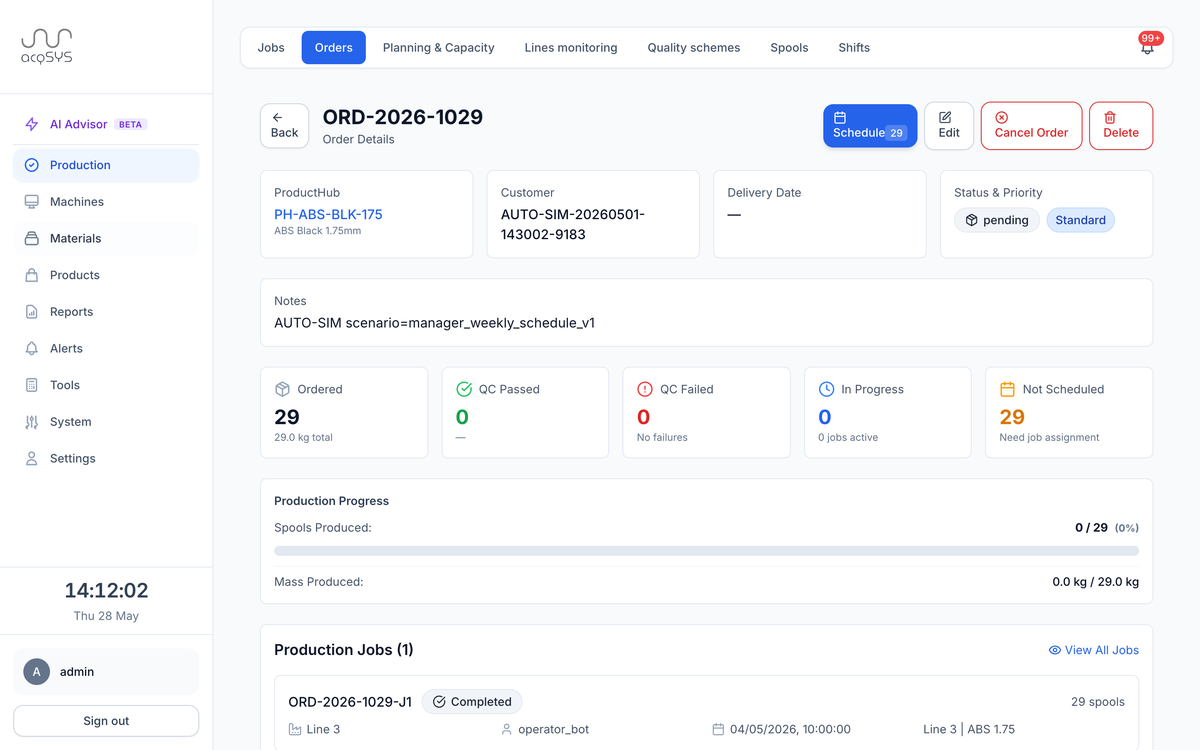
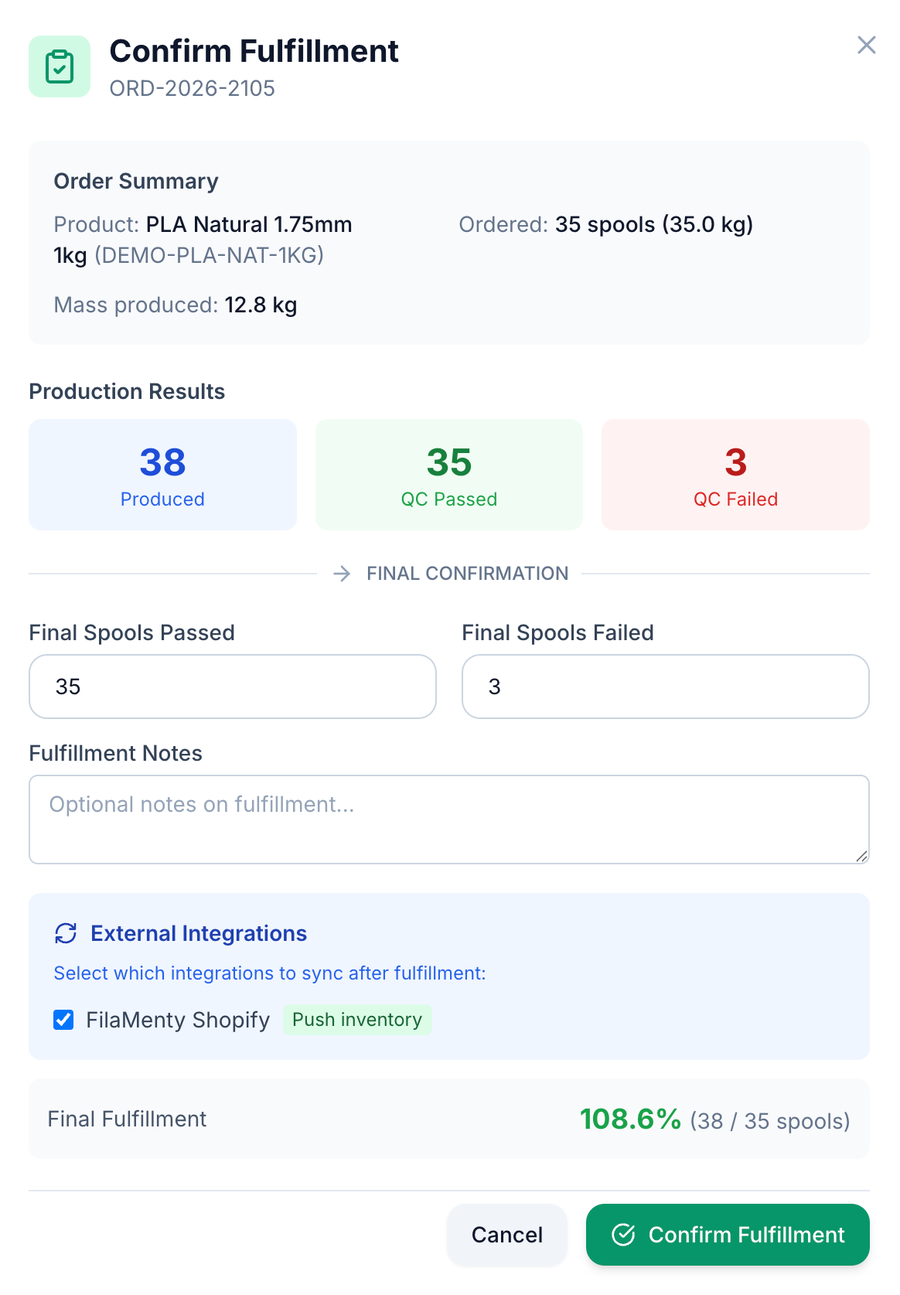
The people reconciling material use, output, counts, process context, and customer fulfillment.
Material context becomes useful when it follows the physical output.
Review final produced counts, transition output, and fulfillment notes.
A formulation may specify the material mix, but the business and engineering question comes later: which spools were produced, which counts are regular or transition, what passed QC, what behaved differently, and what can be fulfilled or synchronized to another system?
The recipe defined in ProductHub, the batch that ran on the line, and the counts you confirm at fulfillment stay connected as one record.
Base materials, masterbatch, additives, percentages, and preparation notes in ProductHub.
Operator-anchored production batches group spools within a job for traceability.
Final counts can separate regular and transition spools before closing the order loop.
acqSYS connects production and fulfillment context, but material-lot granularity and stock-sync depth are scoped with each manufacturer — warehouse systems stay external and exchange data through integrations.
Material context is not separate from production or process learning. It links ProductHub recipes, jobs, batches, spools, QC, fulfillment, reports, and integrations.
We will map your recipes, batches, transition output, fulfillment review, and inventory-sync expectations into an acqSYS workflow.