acqSYS uses ProductHub to separate the manufacturing formulation from commercial SKU identity, then connects recipes, machine configurations, process settings, QC schemes, and labels to production jobs.
Use the demo to see how one ProductHub feeds planning, operators, QC, and labels.
The person keeping product setup trustworthy across production, packaging, optimization, and R&D.
One manufacturing recipe serves multiple brands, packages, and commercial variants.
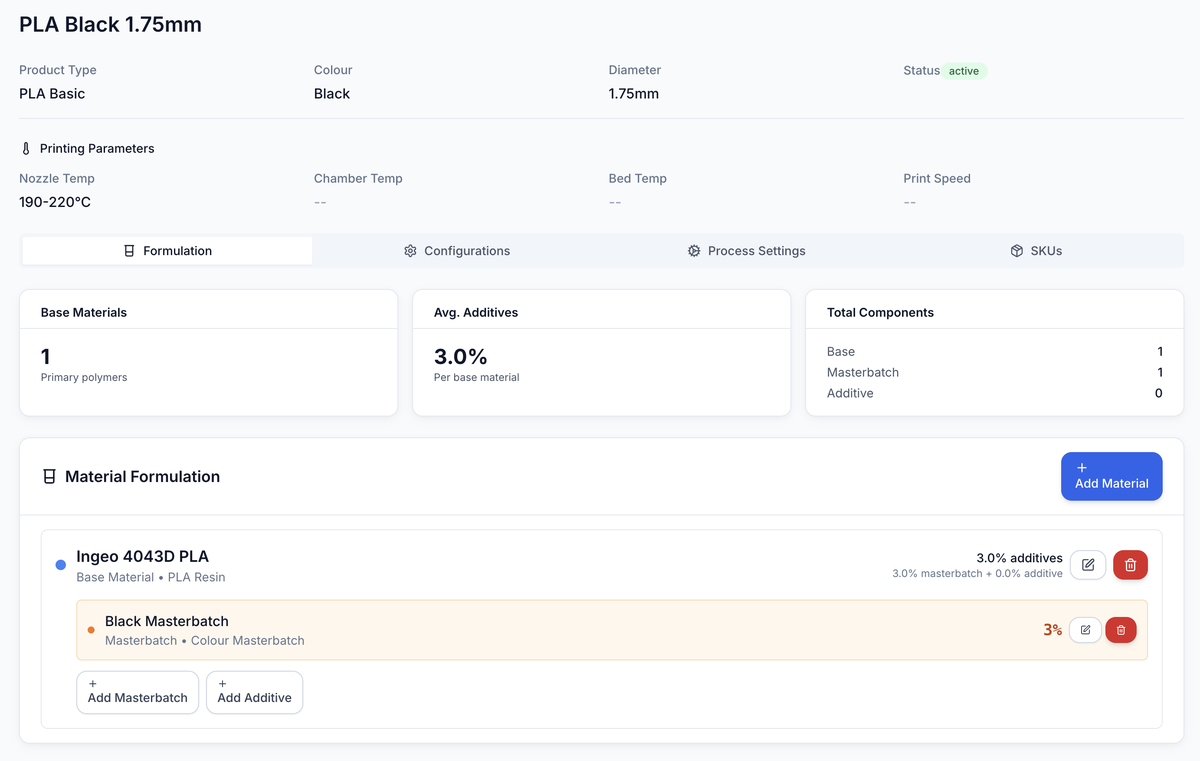
Create or review a formulation and see where it appears downstream.
ProductHub holds the versioned formulation, the SKU layer holds the commercial variant, and configurations tie both to the machines that can run them.
Versioned formulation, recipe, material percentages, diameter, process settings, and QC scheme.
Commercial variant, brand, package mass, EAN, reel, lifecycle, label, and market context.
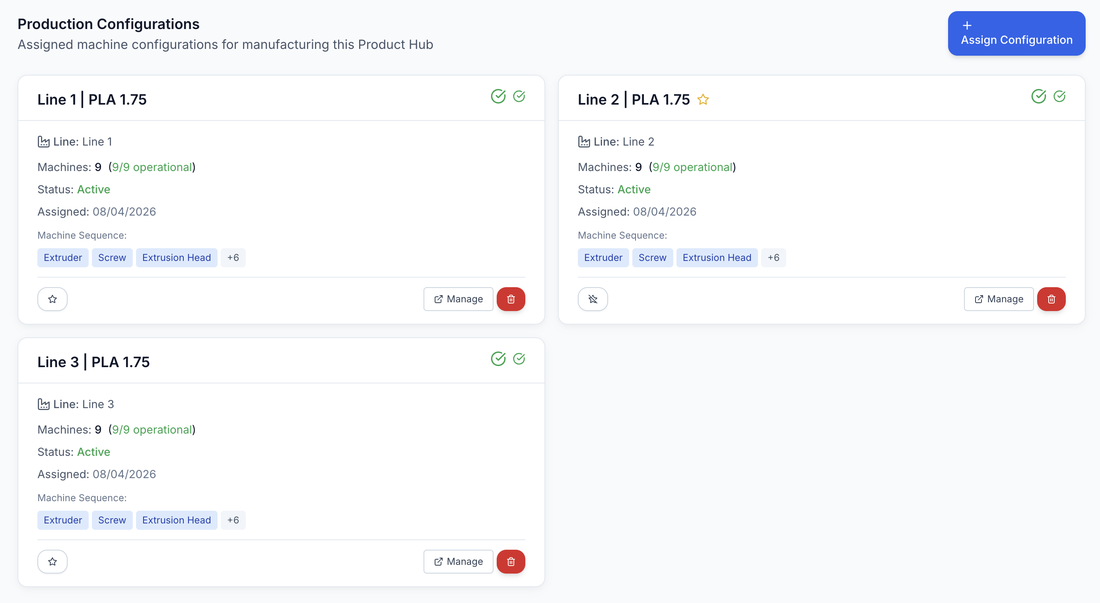
Configurations connect product definitions to the lines and machines that can run them.
A filament formulation may be sold under multiple package sizes, brands, or markets, and may also evolve through trials. If manufacturing settings, QC rules, labels, process notes, and commercial identity are flattened together, every change risks breaking another workflow or hiding what actually improved.
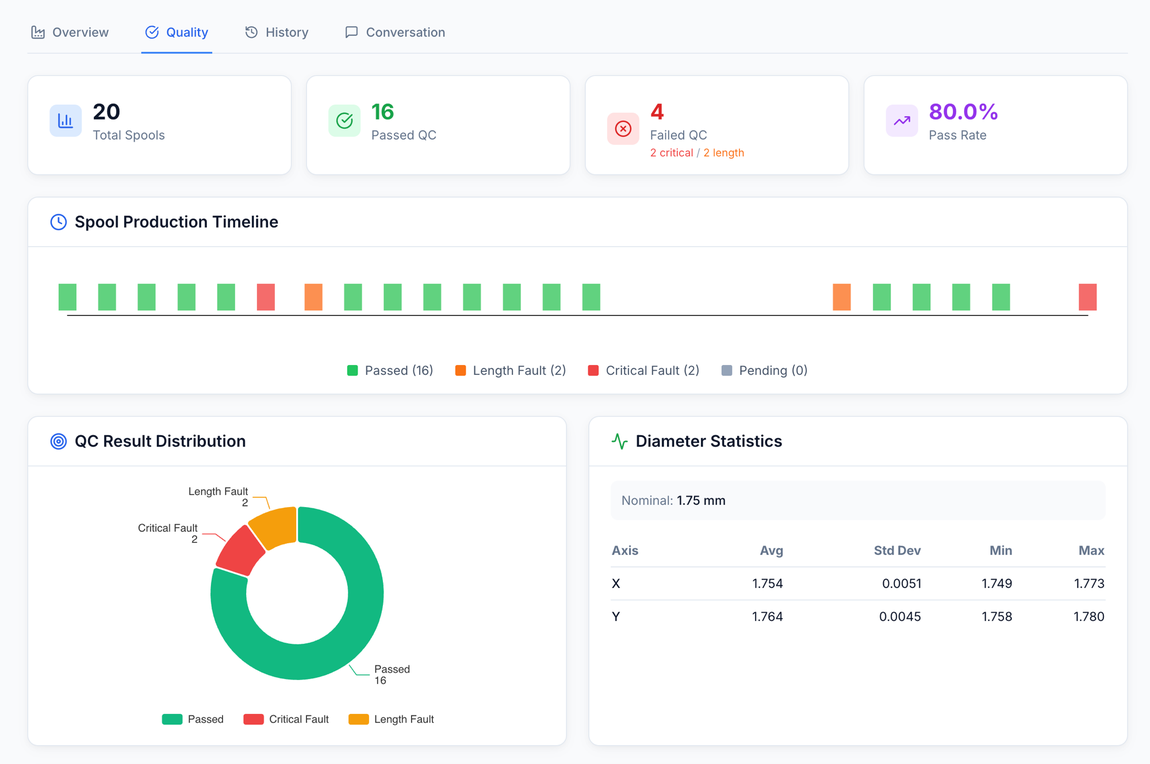
One product definition drives what operators see, what QC checks, and what labels print. Planning, QC, labels, and process review stop inheriting stale commercial fields.
The formulation is half the model — the other half is the equipment it runs on, kept specific enough that process settings mean something per machine.
Production lines are modeled machine by machine — each unit in the line's sequence is a typed piece of equipment.
Line configuration management records which lines and machine setups can run a given product, so work is planned only onto lines that can run it.
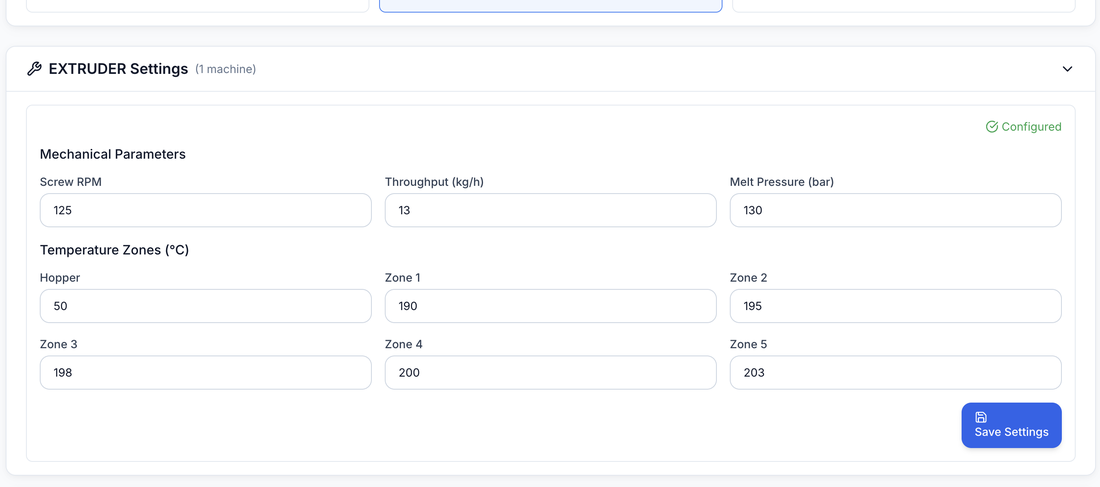
Process settings attach to the machine that owns them — screw speed, throughput, melt pressure, and temperature zones per configuration.
The model supports the way filament producers separate what they make, how they sell it, and how they learn from it.
ProductHub and SKU data should have clear owners. If recipe, process, QC, trial, or label changes are made casually, downstream production workflows and engineering reviews inherit that uncertainty.
The ProductHub/SKU/spool architecture is built around filament manufacturing and process learning, not a generic item master adapted after the fact.
The product model is the source the rest of acqSYS reads from — documentation, planning, and labels all resolve against it.
Show us your product range and we will model it as ProductHub formulations, machine configurations, SKU variants, and label rules.